The complete implant survival guide.

The Hudson - Complete Guide

The complete implant survival guide.

Dental implant tourism in Vietnam, explained without the sales fog.

10 chapters~45 min readWritten for AU / US / UK patients

By Hiep Nguyen, dental tourism coordinator - last updated May 2026

Real costs, implant brands, clinic checks, trip timing, recovery rules, and what to do if something feels wrong after you fly home.

A note before you read

Most patients arrive at their first consultation without knowing what questions to ask. That puts the clinic, not the patient, in control of the treatment plan. Read this first, then ask for an itemised plan.

Both. And it is completely valid. But here is what most people get wrong: the risk does not come from the country you go to. It comes from who does your teeth.

You are getting the same brands and the same procedure. What you are not paying for is Sydney rent and Australian wages.

This decision is smart if you choose the right clinic. It goes wrong if you pick the cheapest one you found on Google. That is the whole difference.

A natural tooth has two parts:

  1. The crown: the white part you see.
  2. The root: hidden under your gum, anchored into the jawbone. The root is what holds the tooth in place.

When you lose a tooth, you lose the root too. Bone needs pressure to stay dense. No root means no pressure, so the jawbone slowly breaks down.

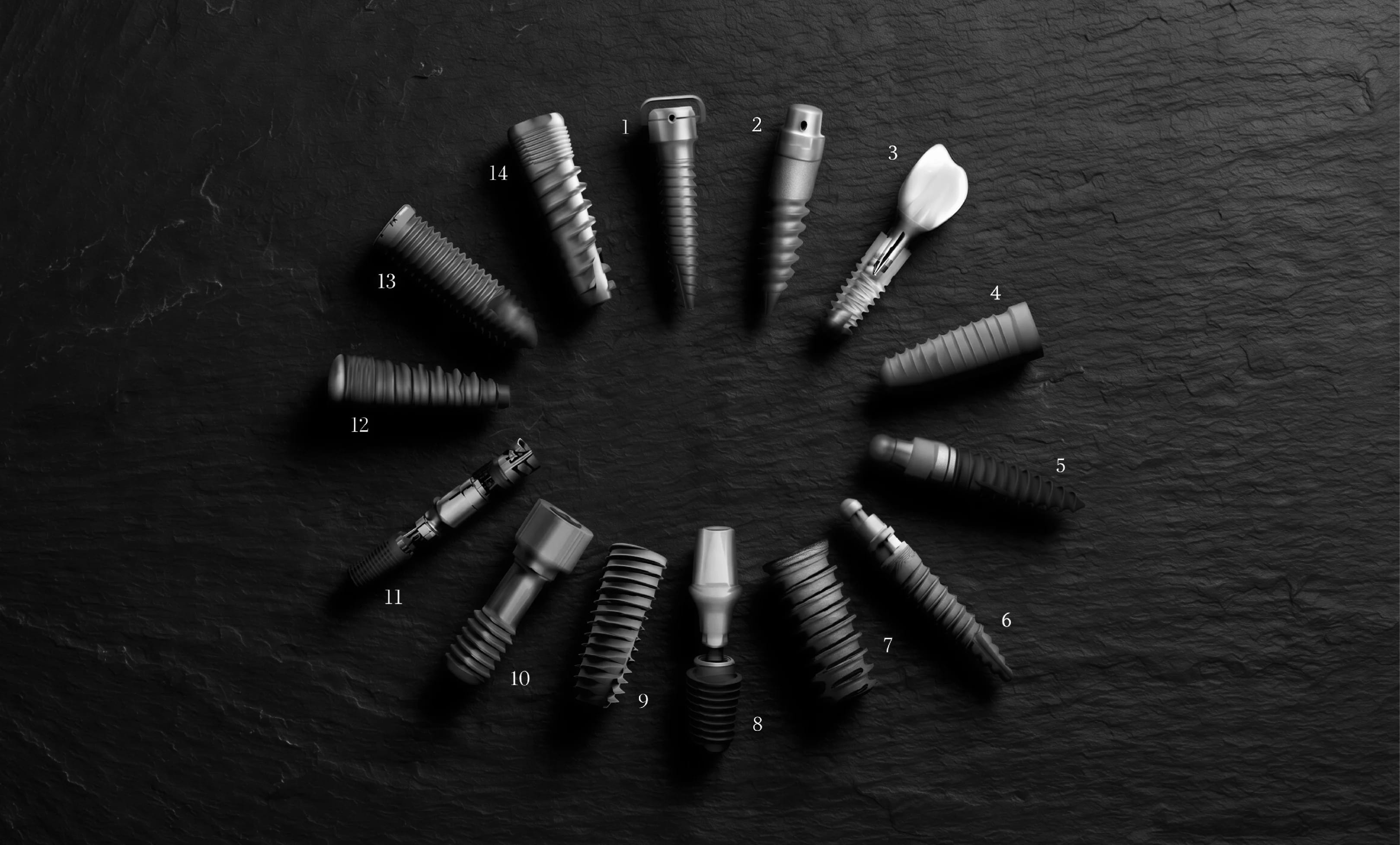
A dental implant replaces that root. A small titanium post is placed into the jawbone where the root used to be. Over 3 to 6 months, the bone grows into the titanium and the two fuse together. Once fused, a crown is attached on top.

The result is a tooth that is anchored into your jaw, not glued to the surface and not held up by the teeth beside it. Fixed. Permanent. Functional.

Most people ask: Is Vietnam safe? The better question is: Is this clinic safe? The good news is that you can tell before you fly.

Three questions will tell you more than any polished clinic website. Email any clinic before you commit.

Question 1: Will you do a CBCT scan before placing the implant?

A CBCT is a 3D scan of your jawbone. It shows the dentist where to drill, how to avoid nerves, how to check bone density, and how to plan the angle. Without it, they are guessing. The answer must be yes.

Question 2: Which implant brand do you use?

Serious clinics use specific, verifiable brands such as Straumann, Dentium, Osstem, Neodent, or Neobiotech. You should be able to verify the serial number after placement. The answer must be a brand name, not a vague phrase like high-quality international.

Question 3: How long is the full process?

Biology takes time. Healing takes 3 to 6 months. If you are getting full-mouth implants, a proper clinic can provide fixed temporary teeth in the first trip so you are not left toothless. But your bone still needs time to fuse with the titanium.

Any clinic that promises final permanent teeth in one short trip is prioritising speed over biology. That is where avoidable failures begin.

Here is every single cost involved in getting a dental implant in Vietnam. The main clinical variable is the brand of the titanium post.

Typical implant post cost by brand
BrandEstimated costPositioning
Straumann (Switzerland)$1,300 to $2,000Deepest clinical research and strongest global recognition.
Dentium / Megagen (Korea)$900 to $1,300Global use with strong value for multi-implant cases.
Osstem (Korea)$700 to $1,000Widely used and clinically sound when properly planned.

The all-in implant price should include the titanium post, abutment, zirconia crown, and surgical placement. If the quote does not itemise these, ask again.

The costs most people forget

  • Bone graft: if a tooth has been missing for years, the bone shrinks. A graft rebuilds it. Add $300 to $600 per site.
  • Sinus lift: required for upper jaw implants if the sinus cavity sits too low. Add $500 to $1,200.
  • CBCT scan: the 3D map of your jaw. Usually $50 to $150. A premium clinic often includes this in the treatment plan.
  • The second trip: the final crown is fitted 3 to 6 months after the post is placed. Budget for this before you book the first trip.

The honest total

For a single implant from Australia, the dental work is often $900 to $1,400. Your first trip, including flights and seven nights in Hanoi, can add $1,200 to $2,000. Your second trip for the final crown can add another $800 to $1,400. Total: $2,900 to $4,800.

The same procedure in Sydney often costs $5,000 to $7,000. The saving on a single implant is real, but it is a marginal financial gain. Multiple implants change the math entirely.

For a full arch treatment such as All-on-4 across both jaws, clinical work may cost $12,000 to $18,000. Two return trips can add $2,000 to $3,400. Total: $14,000 to $21,400, compared with $40,000 to $70,000 in Australia.

  • One implant: you may save $1,000 to $3,000. The reason to do it is access to a strong clinical team, not just the budget.
  • Three or more implants: you may save $10,000 to $20,000. The logic becomes clearer.
  • Full mouth or All-on-4: you may save $30,000 to $50,000. This is where the financial argument becomes obvious.

You can fly home. The clinic can close. The dentist can retire. The implant stays in your jaw for the rest of your life.

This is why the brand matters so much. A great clinic placing an unbranded implant can give you a smooth experience today and a serious structural problem in five years.

Straumann - Switzerland

Straumann is one of the most clinically researched implant brands in the world, with broad global availability. If you want the most recognised name in implantology with minimal compromise, this is the premium option.

Neodent - Brazil, Straumann Group

Neodent is owned and engineered by Straumann Group. It sits at a more accessible price point while still benefiting from the group's quality control and engineering standards.

Dentium - United States

Dentium is documented across many markets and is particularly useful for complex cases such as All-on-4, All-on-6, and multi-implant treatment where consistency between placements matters.

Neobiotech - South Korea

South Korea is one of the most advanced dental markets in the world. Neobiotech's macro-thread design can help achieve initial stability in lower-density bone. If your scan shows lower bone density, ask whether this is appropriate for your case.

The non-negotiable: your implant passport

Every implant coordinated through The Hudson should come with a physical implant passport: your name, the brand, the model, the serial number, and the placement date. Keep it. If you ever need dental treatment anywhere in the world, your dentist will know exactly what they are working with.

Biology dictates this timeline, not your dentist. Here is what is happening under your gums at each stage, and what you need to do to protect your investment.

Week 1 - the wound is closing

The surgical site is sealing. Swelling, mild tenderness, and a dull ache for the first two or three days are normal. Eat soft foods. Do not smoke. Do not touch the site with your tongue. Let it close.

Month 1 - mechanical stability

The swelling is gone and the gums look normal. But inside the jawbone, there is no biological fusion yet. The implant is held in place by mechanical friction. It feels stable, but it is not permanent. A hard bite now can disturb the screw.

Month 3 - the stability dip

This is the most dangerous phase because you feel normal. The initial mechanical tightness naturally decreases as the bone adjusts around the implant, while new bone is only beginning to attach to the titanium surface.

One hard bite during this phase can create micro-movements that stop the bone from fusing correctly. The implant may not fail dramatically. It may simply never integrate properly. Keep your diet sensible.

Month 4 to 6 - biological fusion

Osseointegration is complete. The titanium post and your jawbone have fused into a single structure. You return to Vietnam, the partner dentist confirms integration with an X-ray, and the permanent crown is fitted.

Healing signs: normal vs not normal
NormalCall the clinic or The Hudson
Mild swelling or tenderness for the first few days.Swelling that worsens after day three or comes with fever.
A dull ache controlled by the medication plan.Sharp pain that escalates, bleeding that does not settle, or discharge.
Feeling normal at month three while still avoiding hard bites.Any movement, looseness, or shifting when you press or bite.

Why this timeline cannot be shortened

A clinic promising permanent teeth in one week is placing a finished crown onto an implant that has not fused to the bone. It may look completed, but the foundation is not ready.

Less than you think. Implant placement is usually a minor procedure under local anaesthetic. No general anaesthetic. No hospital stay. You walk in, you walk out, and you go back to your hotel.

The first trip - 7 to 8 days in Vietnam

  • Day 1: arrival, rest, orientation. Nothing medical happens today.
  • Day 2: consultation and CBCT scan. The dentist reviews your bone structure, confirms the treatment plan, and answers questions.
  • Day 3: implant placement. The procedure often takes 15 to 30 minutes per implant under local anaesthetic. Most patients are back at the hotel by lunch.
  • Day 4: rest. The site is healing. Most people can walk around the city, eat soft food, and function normally.
  • Day 5: follow-up check. The dentist confirms the site is healing correctly.
  • Day 6 and 7: free days. Most patients use these to explore Hanoi or Ho Chi Minh City while the site settles.
  • Day 8: fly home.

The second trip - 4 to 5 days in Vietnam

  • Day 1: arrival.
  • Day 2: X-ray confirms fusion. Abutment connected. Impressions taken for the permanent crown.
  • Day 3: crown fitted, bite adjusted, final check.
  • Day 4 or 5: fly home with permanent teeth.

How many days off work after you land

  • Desk job, remote work, or non-physical work: take 2 to 3 days off after placement. By day 4 most patients are functional and presentable.
  • Client-facing or public-facing work: take 4 to 5 days. Minor jaw swelling is possible for the first 3 days.
  • Physical labour, construction, or heavy lifting: take 7 full days. Physical exertion can slow healing and increase bleeding risk.
  • For the second trip, no recovery time is usually needed. Crown fitting involves no surgery.

Vietnam handles itself: the food, the city, the things to do. This chapter covers the dental trip itself: what to have ready before you fly, while you are at the clinic, and before you board the flight home.

Before you fly

  • Send existing dental records before you arrive: X-rays, previous treatment history, and your home dentist's diagnosis if you have one.
  • Confirm the implant brand and the full itemised cost in writing before booking your flight.
  • Bring enough daily medication for the full trip plus three extra days. Tell the clinic about blood thinners, diabetes medication, and immunosuppressants before you arrive.
  • Consider travel insurance that covers dental complications, because many standard policies exclude dental.

At the clinic

On consultation day, bring a written list of questions. A good clinic should not rush you, but people forget details when they are nervous or preparing for anaesthetic.

  • What brand and model is the implant you are placing today?
  • Will I receive my implant passport before I leave the clinic?
  • What are the signs I should contact you about during healing?
  • What direct contact should I use if I have concerns after returning home?

After the procedure, do not leave without three things: your implant passport, written post-operative instructions, and a direct clinic contact number.

Before you fly home

  • Wait at least 48 hours after placement before flying where possible.
  • Eat before you get on the plane, because airport and airline food is rarely built around a soft diet.
  • Photograph your implant passport and email it to yourself before you pack it.
  • Confirm your second appointment date before leaving Vietnam. Get a specific date in writing.

The only packing tip you need

Bring one bag, two changes of clothes, and enough for the flight and first day. Vietnam has everything else. Buy what you need when you arrive.

Most implants integrate without incident. But complications do happen, and when they do, you should not be dealing with them alone.

What can actually go wrong

Most issues after returning home are healing variations: the site takes longer to close, mild surface sensitivity, or tenderness that lingers slightly longer than expected. These usually do not threaten the implant.

Actual implant failure is less common. It is most often linked with heavy smoking during healing, uncontrolled diabetes, or biting hard food during the stability dip around month three. All three are preventable risk factors to discuss clearly with the clinic.

The sign of genuine failure is movement. If the implant feels loose, moves when you press it, or shifts when you bite, that is the signal. Everything else needs assessment, but movement is the urgent red flag.

When something feels wrong, reach out to us first

You do not need to figure this out on your own. Contact The Hudson as soon as something feels off. Send a message, a photo of the site if you can, and a description of what you are feeling.

We will speak to the clinic directly and come back with a clear picture of what is happening and what the right next step is. You can also contact the clinic directly if you prefer, but if you are unsure, start with us.

If you need someone local to take a look

If the situation needs a physical assessment, The Hudson can help you find a trusted clinic in your city. Bring your implant passport. Ask for an X-ray and assessment. We will help you understand the results and coordinate the next step.

If a return trip is needed

Genuine integration failure is rare. If it happens, the post is removed, the site heals, and the implant is replaced. Many reputable Vietnamese clinics cover this within the warranty period at no charge, subject to the warranty terms.

The Hudson coordinates the return appointment, warranty confirmation, and logistics so you are not trying to manage it alone from another country.

Vietnam does not take Amex everywhere. Your bank's international transfer may add a percentage fee on top of a poor exchange rate. On a $4,000 payment, that can be meaningful money gone before you sit in the chair.

How do I know this is real?

You are about to send money to a company in Vietnam you found online. It is completely reasonable to be cautious. The Hudson does not ask you to send a large sum upfront.

A 10 percent deposit confirms the booking. The remaining 90 percent is paid directly at the clinic, in person, after you have met the team and are proceeding with treatment.

Before any transfer, The Hudson provides payment details in writing: company name, account number, bank name, and confirmation from a real person. If anything feels off, do not send. Contact us first.

How to pay your deposit

The 10 percent deposit is collected through Stripe. You receive a secure payment link, pay by card, and receive a receipt immediately. No bank details to copy and no manual transfer errors.

How to transfer the rest

For the remaining balance, Wise is often the cleanest option. It transfers money close to the mid-market exchange rate with a clear fee. On a full arch case, the difference compared with a standard bank transfer can be significant.

Load your Wise account at least three days before departure so you are not managing a large transfer from a hotel lobby the night before the procedure.

If you want to spread the cost

  • Splitit can split an existing credit card limit into monthly instalments without a new loan application, subject to card limit and provider terms.
  • Humm and Zip Money are Australian financing platforms used for medical and dental treatment. They involve application and approval.
  • TLC Finance and Latitude Financial specialise in longer-term medical finance and may suit larger full arch or full mouth cases.

A note on superannuation

Early super release for dental treatment exists under Australian law, but approval criteria are strict. The ATO requires documented evidence that the condition is causing severe chronic pain or significantly impacting health, confirmed by registered medical practitioners.

Approval for implant cases is not guaranteed. It can be worth discussing with your super fund, but do not build your payment plan around it.

The smartest way to think about the total cost

The money saved by coming to Vietnam does not have to sit in your bank account. Some patients upgrade their flight, extend the trip, pay off debt, or split the cost over time and keep savings untouched.

However you structure it, The Hudson's job is to make sure the saving does not disappear into unnecessary fees or unnecessary worry.