The implant safety checklist
For anyone getting dental implants abroad.
What to check before you pay, in the chair, and once you’re home.
Before you fly
Treat gum disease first, and get it checked.
Past gum disease is the most consistent patient factor in implant loss and in gum infection around implants. In the Swedish population study, gum disease meant about 3 times the odds of losing an implant early. [3][6] Read more →
Stop smoking, or at least cut right down.
Smokers lose implants early about twice as often, and the risk rises with the number of cigarettes a day. What counts is whether you smoke, and how much. [4][5] Read more →
List every medicine you take, and send the list before you book.
Some daily medicines, antidepressants among them, are linked to more implant failure. The surgeon must know. Never stop a prescribed medicine on your own. Tell the surgeon and your own doctor. [7][2] Read more →
Taking bone-strengthening drugs? Say so, with the dose and how long.
With bisphosphonates or denosumab the main risk is a rare jaw-bone problem, not the implant failing. For osteoporosis doses, the jaw-bone problem was rare: about 0.5% after implants. [8] Read more →
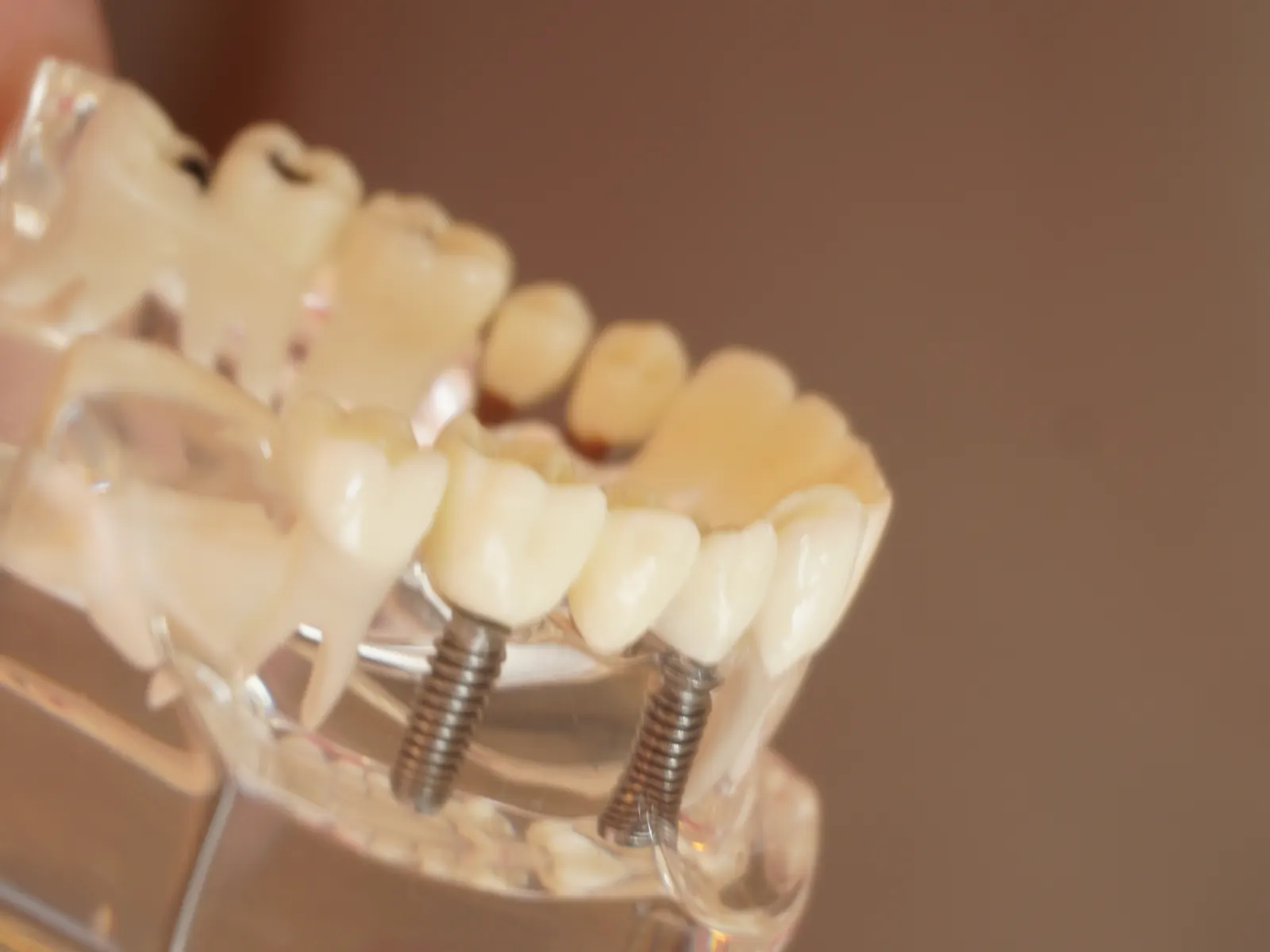
Diabetes? Bring an HbA1c result from the last 3 months.
Well-controlled diabetes heals close to normal. Poorly controlled diabetes means more gum infection around implants. [9] Read more →
Had head or neck radiotherapy? Say so. This is a specialist case.
Implants in bone that had radiotherapy fail about twice as often. It needs a hospital team with your cancer records, not a standard trip. [10]
Ask for a 3D scan (CBCT) before the plan is final, and ask what it showed about your bone.
The amount of bone decides the implant length, whether you need a graft, and whether one trip is possible. Bring any scan you already have. [12] Read more →
Ask if you need a bone graft or sinus lift, and how it changes the timeline.
Grafts work well, but they add healing time and usually mean two trips. [13] Read more →
Ask which implant brand and model, before you pay.
In the Swedish population study, implants from small-share brands had about 8 times the odds of early loss. Choose a well-documented major system, and ask that the connector and screw come from the same maker. [3] Read more →
Ask who places the implants, and how many they place.
Surgeons differ in early failure rates. No study gives a safe minimum number, so ask and compare. [14]
Ask whether your case can be one trip or needs two, and why.
Same-day teeth work for the right single-implant cases. For a full arch the evidence is thinner, and everything depends on the implant being firm in the bone on day one. [15] Read more →
Get the warranty in writing, and read who it actually covers.
A maker's "lifetime" guarantee is often a promise to the dentist about parts, not to you about the cost of redoing the work.
In the chair
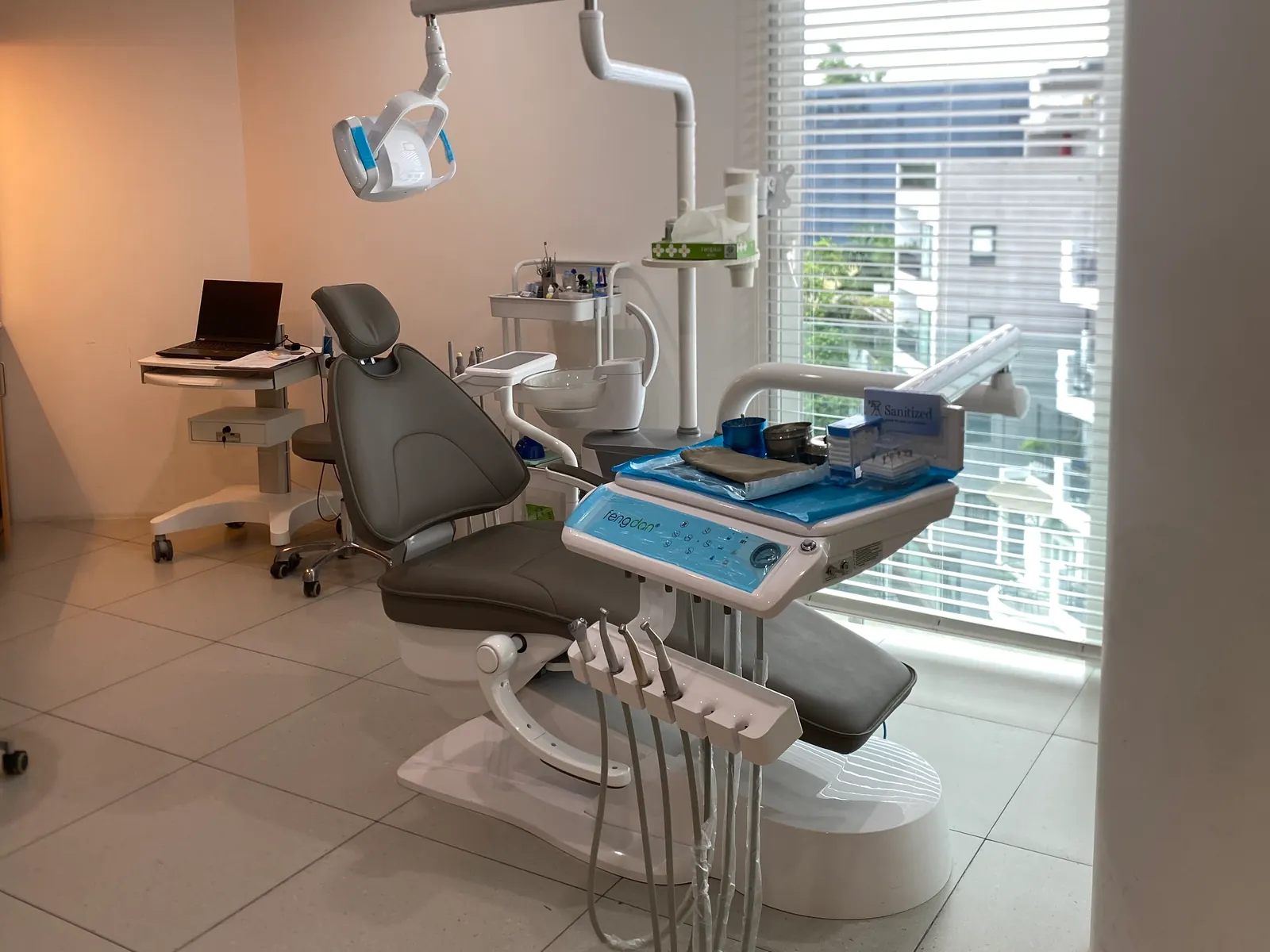
Get the implant card before you leave.
It should show the brand, model, size and date for each implant. Any dentist back home needs it to find matching parts. [16] Read more →
Take photos of the implant box labels, and take your X-rays and scans home.
The sticker carries the maker's name and the implant's details: the simplest check that the implant is the one you paid for. [16] Read more →
Ask whether the crown is screwed in or cemented.
Leftover cement under the gum is a known cause of gum infection around implants. If it is cemented, ask how the extra cement is removed, and get an X-ray after. [17][18] Read more →
Ask what the crown is made of, which brand, and which lab makes it.
Both main materials work well on implants (about 98% still in place after 5 years); they fail in different ways. A brand and a lab can be checked. "Zirconia" alone cannot. [19] Read more →
Before the final teeth go on, check the fit and your bite, and get a baseline X-ray.
The baseline X-ray is what every future dentist compares against to spot bone loss early. [20]
At home, for life
Book a dentist or hygienist at home before you fly, and go about every 6 months.
People who skipped regular care had about 3.8 times the odds of implant failure. [9][21] Read more →
Clean around the implants every day, and know the warning sign.
Gum infection around implants is common, and plaque is the cause. The sign to act on: gums around an implant that bleed. [22][20] Read more →
Keep your implant card, X-rays and notes together, and give copies to your dentist at home.
Without them, a dentist at home is guessing which parts you have. Read more →
The six that matter most

What the big studies found
- 67of 1,406 patients had 57% of all failed implantsSweden, people with 3 or more implants 2
- about 3×the odds of early loss with gum disease2,765 patients, Swedish population 3
- about 2×early loss in smokers32 studies, 14,115 patients 4
- about 8×the odds of early loss with small-share implant brandsSwedish population 3
The first study looked at 1,406 people in Sweden who each had three or more implants. Just 67 of them had more than half of all the implants that failed. In that small group, grinding and antidepressants showed up more often. [2]
The second followed 2,765 people drawn at random from the Swedish national register. Gum disease, smoking, implants shorter than 10 mm and less common implant brands all raised the odds of losing an implant early, before the teeth went on. Still, 95.6% of patients lost no implant early. [3]
These are odds in groups of people, not a forecast for you.
The rules in Vietnam
Medical devices in Vietnam, implants among them, have to be registered with the Ministry of Health. [23] We found no official warning about fake dental implants in Vietnam. Copy implants do exist in many countries, though, so the check that works anywhere is the one you can do yourself: the implant card, and a photo of the box label (items 14 and 15).
The implant brands on our price list are Osstem (South Korea), Hiossen (USA), Kontact (France), Straumann (Switzerland), Neodent (Straumann Group, Brazil) and Nobel (Sweden). What each one costs is on the pricing page.

What I see in Vietnam
- Every clinic sets its own price, so there is no standard price. Many quote foreigners 2 to 3 times what they quote Vietnamese patients for the same work.
- Expensive does not mean safe. The market is messy.
- Check the implant brand, and that the parts are genuine. The crown on top too: many quotes just say “zirconia”, from a lab nobody names. Ask which brand and which lab.
- My rule: every implant and All-on-4 with us comes with the genuine brand, size and details written down. If a clinic won’t do that, we don’t work with it. Not every clinic in Vietnam does this.

Sources
- Howe MS et al. 2019, Journal of Dentistry (10-year implant survival, 18 studies)
- Chrcanovic BR et al. 2017, Clinical Implant Dentistry and Related Research (1,406 patients, Sweden)
- Derks J et al. 2015, Journal of Dental Research (2,765 patients, Swedish population)
- Fan YY et al. 2024, Journal of Dentistry (smoking and early implant failure, 32 studies)
- Stiller et al. 2024, Dentistry Journal (smoking dose and implant failure, 33 studies)
- Annunziata M et al. 2024, Journal of Periodontal Research (gum disease and implant loss, 14 cohorts)
- Harutyunyan L et al. 2024, Int J Oral Maxillofac Implants (antidepressants and implant failure)
- Mirza R et al. 2025, Endocrine Practice (bone-strengthening drugs and implants)
- Carra MC et al. 2023, Journal of Clinical Periodontology (risk factors and maintenance)
- Schiegnitz E et al. 2022, Clinical Oral Implants Research (implants after radiotherapy)
- Häggman-Henrikson B et al. 2024, Journal of Oral Rehabilitation (grinding and implants, 27 studies)
- Tyndall DA et al. 2012, AAOMR position on imaging for implants (3D scans)
- Pjetursson BE et al. 2008, Journal of Clinical Periodontology (implants after a sinus lift)
- Jemt T 2019, International Journal of Prosthodontics (9,167 implants, surgeons and early failure)
- 2026 meta-analysis of trials, Journal of Prosthetic Dentistry (same-day vs later teeth, single implants)
- Council of European Dentists 2020, position on implant cards (PDF)
- Wilson TG 2009, Journal of Periodontology (leftover cement and implant gum disease)
- Sailer I et al. 2012, Clinical Oral Implants Research (screwed vs cemented crowns, 59 studies)
- Pjetursson BE et al. 2018, Clinical Oral Implants Research (crown materials on implants)
- Berglundh T et al. 2018, World Workshop consensus (baseline X-ray, warning signs)
- Monje A et al. 2016, Journal of Dental Research (how often to have check-ups)
- Derks J, Tomasi C 2015, Journal of Clinical Periodontology (how common implant gum disease is)
- Vietnam Decree 98/2021/ND-CP on medical devices (summary, Tilleke & Gibbins)
Every source above was opened and read on 24 October 2026; the numbers on this page are the ones the sources give. “What I see in Vietnam” is Hudson’s own experience, not research. The Hudson plans and coordinates treatment at partner clinics in Vietnam; we are not a clinic. This is general information, not advice for your own mouth: your surgeon decides after seeing your scan. About the author.